
Aerial View of Property: How to Find One Free (and When to Pay) in 2026
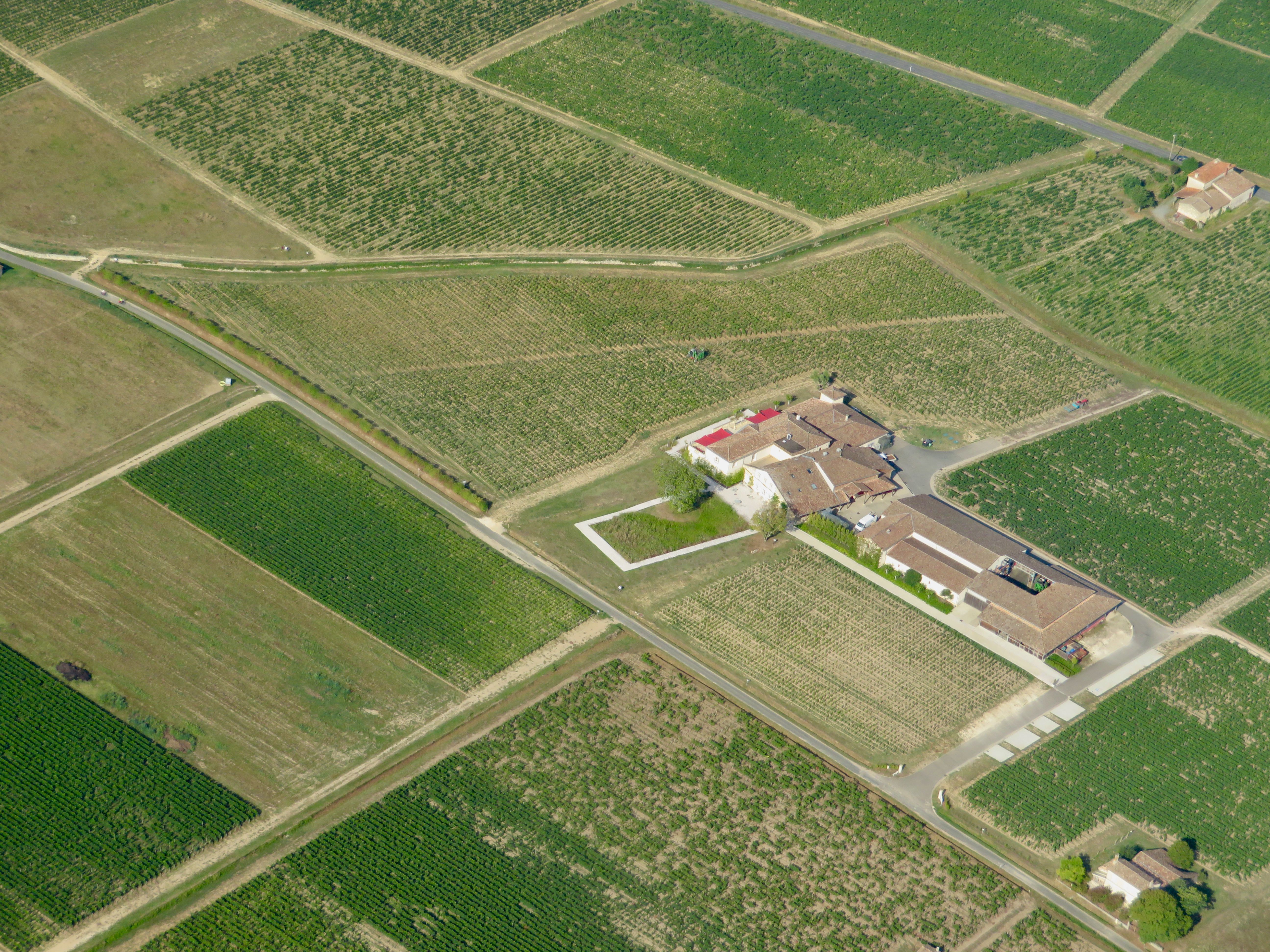
How to get an aerial view of any property by address. Compare free satellite tools, drone services, historical imagery, and paid high-resolution options — plus which to pick for your use case.
Aerial View of Property: How to Find One Free (and When to Pay) in 2026
An aerial view of property answers questions that street-level photos and listing descriptions never can. How does the house sit on the lot? Is the backyard actually private, or does it back onto a parking lot? What does the roof look like? How close is the nearest highway? Is there a flood-prone creek behind the trees?
A good overhead image surfaces all of this in seconds. The challenge is that "aerial view" can mean five different things depending on the source — satellite photo, aerial flyover, drone shot, oblique angle, top-down ortho — and each has different resolution, different cost, and different use cases.
This guide walks through every realistic way to get an aerial view of a property in 2026, when each method is worth the effort, and how to pick the right one for what you're actually trying to do.
Aerial Photography vs. Satellite Imagery: Why the Difference Matters
People use the terms interchangeably, but they describe two very different things:
- Satellite imagery is captured from space, usually 400–700 km above Earth. Free public sources have resolutions around 50 cm to 1 m per pixel. Commercial providers push down to 30 cm. Coverage is global and frequent, but detail is limited.
- Aerial photography is captured from planes or drones, typically a few hundred meters up. Resolution can hit 7–15 cm per pixel. You can see individual shingles, garden plants, vehicle details. Coverage is patchy and updated less frequently, but the imagery is dramatically sharper.
For most uses — orientation, lot context, neighborhood layout — free satellite imagery is plenty. For inspection, insurance documentation, marketing, or anything where detail matters, you'll want true aerial photography. Knowing which one you actually need saves time and money.
For a deeper breakdown of how satellite imagery works and where to find the highest-resolution sources, see our guide on getting a satellite view of my house.
Free Ways to Get an Aerial View of a Property
You can get a usable overhead image of almost any U.S. property in under two minutes without spending anything. Here are the sources worth knowing.
1. Google Maps and Google Earth
The default starting point. Open Google Maps, type the address, switch to Satellite view, and zoom in. Google Earth (free desktop and mobile app) goes further — it adds 3D buildings, terrain, and historical imagery sliders that let you scroll back through years of past captures.
Best for: quick checks, general orientation, getting a feel for the neighborhood. Limits: imagery refresh varies by location (often one to three years between updates), and resolution maxes out around 15–30 cm in most urban areas, less in rural ones.
2. Bing Maps Bird's Eye View
Bing's Bird's Eye View is one of the most underrated free tools. Instead of straight-down imagery, it shows oblique aerial photos from four cardinal directions, captured by low-flying aircraft. You see the property in 3D — roof slope, building height, side views — instead of just a flat outline.
It's not available everywhere, but where it is, it's the best free angled imagery you'll find.
3. USGS National Map Viewer (NAIP)
The U.S. Geological Survey's National Map Viewer pulls in National Agriculture Imagery Program (NAIP) photos — high-quality aerial photography captured by plane during growing season, typically refreshed every two to three years. Resolution is around 60 cm per pixel, and the images are free to download as JPG or PDF.
NAIP is what professionals use when they need a baseline aerial image that's better than Google Maps and free of commercial restrictions. Visit the National Map Viewer, enable the Imagery (NAIP Plus) layer, search your address, and export.
4. County GIS and Assessor Portals
Nearly every U.S. county runs a public GIS portal that overlays parcel data on aerial imagery — often higher-resolution than Google's, and frequently captured by the county's own contracted flyovers. Search [your county] GIS or [your county] property viewer. Most include lot dimensions, owner info, zoning, and the ability to print a clean aerial map.
5. State and Regional Aerial Programs
Several states maintain their own aerial imagery programs. Pennsylvania (PAMAP), New York (NYS Orthos), Texas (TNRIS), and California (CalAtlas) all publish high-resolution orthophotos for free download. If you're in a state with an active program, the imagery is often sharper and more recent than what's on Google.
Paid Options When Free Isn't Enough
Free works for most casual needs. These are the situations where paying actually pays off:
Recent High-Resolution Satellite Imagery
Companies like Maxar, Planet, Airbus, and others sell on-demand satellite images down to 30 cm per pixel, often captured within the past few weeks. You can target a specific date range, which is critical for insurance claims, construction documentation, or change detection.
Expect $10–$50 per square kilometer for an archive image, more for a fresh tasking.
Drone Photography
For sharp, recent, custom imagery, a licensed drone operator beats any satellite or fixed-wing source. Resolution can hit 1–3 cm per pixel, you can choose the angle, and the imagery is captured the day you want it.
Typical pricing runs $150–$500 for a residential shoot, more for commercial properties or video.
Best for: real estate listings, before-and-after construction, large-lot marketing, insurance documentation, roof inspections.
Professional Aerial Photography Services
Companies like Nearmap, EagleView, Vexcel, and Hexagon fly entire metro areas on regular schedules and sell access to current and historical aerial imagery. Subscriptions start a few hundred dollars per month for professional access.
Best for: real estate teams, insurance adjusters, construction firms, public-sector planning.
How to Pick the Right Source for Your Use Case
The right tool depends entirely on what you're trying to do. Here's a quick mental model:
| Use case | Best free option | When to upgrade |
|---|---|---|
| Curiosity / orientation | Google Maps Satellite | Rarely needed |
| Real estate research before a visit | Google Earth + county GIS | Drone shots if marketing |
| Property line / fence planning | County GIS | Licensed survey if building |
| Roof condition or storm damage | Bing Bird's Eye | Drone or Nearmap for detail |
| Insurance documentation | NAIP / county imagery | Recent high-res satellite or drone |
| Historical change over time | Google Earth historical | NAIP archives, Nearmap history |
| Real estate listing photos | Skip — go straight to drone | Drone every time |
| Land investment due diligence | County GIS + NAIP | Recent commercial satellite |
| Construction progress tracking | Not viable for free | Drone or Nearmap |
Underrated Use Cases for Aerial Property Views
Most articles fixate on real estate listings. Aerial views are valuable in plenty of other situations that don't get talked about:
- Tracking neighborhood change over years. Google Earth's historical slider can show how a street has filled in over a decade. Useful for assessing growth trajectories before buying.
- Spotting easements and encroachments. A clear top-down view often reveals drainage paths, utility right-of-ways, and neighbor structures that cross boundaries — things you'd miss on the ground.
- Pre-renovation planning. Architects and contractors use aerial imagery to assess setbacks, sun exposure, tree canopy, and access points before drafting plans.
- Estate and inheritance settlements. When properties pass between family members or are subdivided, aerial views help everyone visualize the actual land involved.
- Agricultural management. Farmers use NAIP and drone imagery to monitor crop health, irrigation patterns, and field boundaries.
- Vacation rental and short-term listings. Aerial shots showing proximity to beaches, ski runs, or scenic features convert better than ground-level photos alone.
- Solar and HVAC quoting. Many solar installers now generate quotes remotely from aerial roof imagery instead of in-person site visits.
- Legal and historical research. Title disputes, boundary cases, and historical preservation efforts often rely on archived aerial photography going back to the 1930s — much of which is available through the USGS EarthExplorer archive.
A Few Things to Watch Out For
Aerial imagery is powerful, but it has real limits:
- Imagery isn't always current. Free sources lag by months or years. If you're acting on recent changes (a new build, recent storm damage), check the capture date before drawing conclusions.
- Resolution varies wildly by location. Dense urban areas get the best imagery. Rural and remote properties may have older, lower-resolution coverage.
- Cloud cover and shadows distort detail. Satellite imagery captured at oblique sun angles can hide features. Check multiple sources if something looks off.
- Aerial views can't show legal property lines. They can show fences and visible features, but invisible boundaries require parcel data or a survey. See our guide on finding a satellite map that shows property lines for more on that.
- Privacy and licensing matter. Free imagery from public agencies is fine for personal use, but commercial reuse usually requires permission or a license.
The Bottom Line
Getting an aerial view of property has never been easier or cheaper. For 90% of needs — orientation, research, casual planning — Google Maps, Bing Bird's Eye, and your county GIS are all you'll ever need. For sharper detail, recent captures, or commercial use, drones and paid satellite providers fill in the rest.
The trick is matching the source to the job. Don't pay for a drone shoot when you just want to see how a house sits on its lot. Don't rely on three-year-old Google imagery when you're documenting a storm claim. Once you know what each tier of imagery is good for, every property question becomes a few clicks away from an answer.
For a closer look at the satellite side of the equation — including how to find the highest-resolution free imagery and what makes one platform sharper than another — read our companion guide on getting a satellite view of my house.
Frequently Asked Questions
Can I get a free aerial view of any property? Yes, for nearly any U.S. property. Google Maps, Bing Maps, USGS National Map, and county GIS portals all provide free aerial imagery. Resolution and recency vary by location.
What's the difference between an aerial view and a satellite view? Aerial views are captured from aircraft or drones at low altitude, with very high resolution. Satellite views are captured from space, with lower resolution but global coverage. Many platforms blend both.
How recent is the aerial imagery on Google Maps? Most U.S. urban areas are refreshed every one to three years. Rural areas update less frequently. The capture date is sometimes visible in the lower corner of Google Earth.
Can aerial views show property lines? The imagery itself doesn't show boundaries — those come from parcel data overlaid on the image. County GIS portals and parcel apps add this layer to aerial views. For legally accurate lines, a licensed survey is required.
What's the best free aerial view for real estate marketing? None of the free options are sharp enough for professional marketing. For listings, drone photography is the standard and runs $150–$500 per shoot.